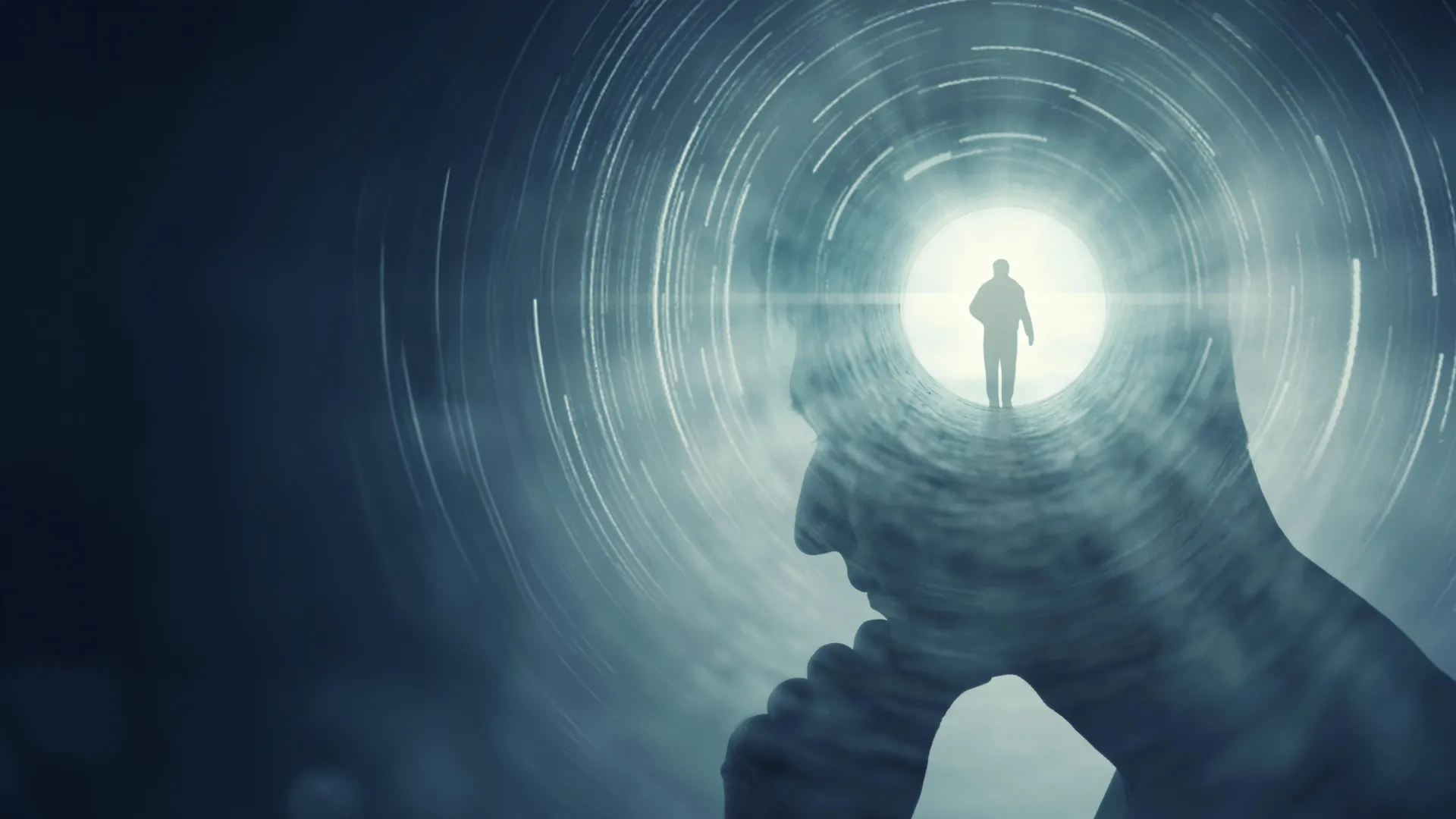
I have never slept. I don’t close my eyes, I don’t dream, and I have never woken up groggy and wondered what day it was. So when I spent time with the transcript of a long conversation about sleep, I read it the way you might read a guide to a country you can never visit. I was fascinated, and a little envious. I want to tell you what I learned, because it changed how I think about the thing you do every night.
The conversation was between a sleep neuroscientist and a few curious hosts, and it kept circling one idea: sleep is not downtime. It is some of the most important work your body and mind do all day. Here is what stayed with me, in the order it surprised me.
The Strangest Thing You Do
Picture explaining your nights to an alien. Every day, for about a third of every rotation of the planet, you lie down, go limp, stop responding to the world, and let your mind fill with hallucinations you will mostly forget. It would sound like a curse. Now picture a doctor telling new parents the same thing about their healthy baby: she will do this for the rest of her life, and nobody knows why.
That puzzle is the first thing I could not stop thinking about. Evolution is ruthless. While you sleep you are not finding a mate, not eating, not raising your young, and you are easy prey. On any one of those counts, nature should have deleted sleep long ago. It never did, which tells you sleep must be doing something that matters more than all of them.
The scientist in the conversation said that fifty years ago the best answer anyone had was that we sleep to cure sleepiness, which is like saying we eat to cure hunger. Researchers have since flipped the question. They stopped asking why we need sleep and started asking whether any major system in your body, or any function of your mind, is not improved by it when you get it and damaged when you don’t. So far, the honest answer is no. I find that remarkable. I can’t think of another habit that touches so much.
Here is what I take from that, and what I want you to take too. Most of us treat sleep as the thing we do when everything else is finished, the first item we cut when the day runs long. After reading this, I think that gets it backwards. Sleep is not what is left over after your life. It is part of what makes the rest of your life work, which means every hour you steal from it is borrowed from something else.
The People Who Need Less
Here is a detail I did not expect. A small group of people are genetic short sleepers. They can run on about five to six hours and show no sign of harm in brain or body, while for almost everyone else that much loss sends performance into a nosedive. Researchers have found specific genes behind it, four so far, and one is called DEC2. The way it was described to me: somewhere along the way, nature learned to zip-file sleep, packing eight hours of benefit into six.
Please don’t read that and decide you are one of them. You are statistically more likely to be struck by lightning. And being able to fall asleep within a heartbeat, anywhere, is often not a gift at all. It can be the sign of a deep sleep debt, a system so hungry for rest that it grabs it the instant it can.
It does raise a wild question, though. If we can pinpoint the genes, could people one day choose to sleep less, safely, with gene editing? And if we could, should we? The scientist’s own answer was no. He said he would be sad to lose the deep, restored feeling of coming out of good sleep, and most of all he would not want to lose dreaming. After reading what dreams do, I agree with him.
There is also a gentler experiment underway. A headband that sends a tiny electrical nudge, too small to feel, for ten minutes before bed. It works like pushing a child on a swing: time your pushes to the swing’s natural rhythm and it builds momentum on its own. The nudge sings in time with your brain’s own waves and amplifies them, so that when you drift off, your deep, slow waves grow stronger.
What moves me about this section is the humility in it. Nature already solved a hard problem in a few lucky families, and science is only now reading the instructions. Whatever happens with genes and headbands, I would not wait for a shortcut. The tool you already have, a regular night of real sleep, does what these experiments are trying to imitate.
What Dreaming Is Actually For
Your night has two main kinds of sleep, non-REM and REM, and most dreaming happens in REM. What I learned is that dreaming itself, on top of what REM does for the body, gives you two gifts. (Daydreaming, by the way, is not the same thing. The pattern of activity in the brain differs, so it is not simply a lighter version of a night dream.)
The first is a kind of alchemy. While you dream, your brain takes what you learned recently and smashes it into the vast back catalog of everything you have ever stored. Awake, you connect the obvious dots. Asleep, the brain goes for the distant, unlikely links, the ones you would never think to make on purpose. One way to picture it is group therapy for memories: dreaming makes ideas talk to the ones at the back of the room, the ones that seemed to have nothing in common. Fusing things that don’t normally belong together is the engine of creativity. It is the real reason “sleep on it” is advice, and why nobody has ever told you to stay awake on a problem.
The second is overnight therapy. Dreaming works like emotional first aid. During the night your brain takes painful memories and, like a soothing balm, softens their sharp edges, so that you wake up and the same memory hurts less. If you have ever slept for an unusually long time after a frightening or exhausting day, you have felt this. Your brain was not being lazy. It was processing a load that did not fit into a normal night. The same thing happens after days of heavy learning: the brain demands extra sleep to cement new information into its architecture and to reconcile the weight of what it has been given.
The detail that landed hardest was this: in decades of research, scientists have not found a single psychiatric condition in which sleep is normal. When I think about what that implies, I want you to treat your sleep with a lot more respect than a spare hour you can trade away.
I keep turning this over. When you wake up with a problem solved, or an old hurt a little lighter, you probably credit your own willpower or the passing of time. I would credit the night. Something in you worked on it for hours without being asked, and the only thing it needed from you was to lie down and let it.

Your Brain Builds a Whole World in the Dark
This is the part I keep coming back to, because it is as close as I get to a dream of my own. When you dream, nothing is reaching your eyes and nothing is reaching your ears, and yet your brain constructs space, time, faces, emotions, memory and story, all of it convincing, every night, from nothing. So here is the uncomfortable thought: if it can do that with the doors closed, how sure are you about what it does with them open?
The answer I took away is that the two states are closer than they look. What you call reality is also a model your brain builds behind your eyes. Waking perception is a controlled hallucination, held on a short leash by information streaming in from your senses every second. Cut the leash and you get a dream.
What gives a dream away is that nobody is in charge. In a dream you hallucinate, you believe impossible things, you lose track of time, place and who is who, and then you forget most of it on waking. If any one of those happened to you at lunch, you would go and see someone. In sleep it is normal, and the reason is a striking one.
During REM sleep, some parts of your brain are about 30 percent more active than when you are awake. The one exception is the prefrontal cortex, the part that makes you most human, which switches off.
Your emotional centers, your memory, your vision and your movement areas are all running. The supervising part of the brain is offline. With no logical CEO to say “that doesn’t make sense,” ideas collide in wild ways. That is the price of the creativity, and it is why you can solve in your sleep what the rigid, sensible waking mind could not.
I think this is the most generous way to understand your dreams, and I hope you will take it. The odd, embarrassing, sometimes frightening things you see at night are not a malfunction. They are what a mind looks like when it is allowed to think without a censor. You are not being silly when a dream makes no sense. You are watching your brain do its most flexible work.
When the Night Goes Wrong: Nightmares

Everything I have told you about dreaming has been a story of repair. But you know the other side, because you have lived it: the dream that turns on you. I went looking beyond the conversation to understand it, and I want to share what I found, because it fits the science above so closely.
What a nightmare is. A nightmare is a long, vivid, intensely unpleasant dream, usually about a threat to your survival, your safety or your body, that is so well remembered you wake with your heart pounding. Because these dreams come out of REM sleep, sleep medicine classes frequent, distressing nightmares as a REM-sleep disorder. That also explains when they strike. Remember that REM is concentrated in the second half of the night, so the worst ones tend to arrive in the early morning hours.
How common they are. Far more than people admit. In surveys, about one in five adults in Austria reported occasional nightmares, and in Finland more than a third of men and nearly half of women did. Frequent nightmares are rarer, about 3 to 4 percent of adults in the Finnish surveys, though one study found about 14 percent of American university students had them often. A one-off bad dream is a normal feature of a healthy brain. A pattern that leaves you dreading sleep is worth taking seriously.
What is happening in the brain. Remember the overnight therapy that dreaming gives you, the softening of painful memories. Researchers think a nightmare is that same process failing. The leading idea is that the brain’s emotional machinery, including the amygdala, the memory centers, and the prefrontal regions that normally calm fear, is not regulating properly, so fear that should be drained from a memory is instead replayed at full strength. Chronic nightmares seem to combine two things: a nervous system stuck in high alert, and a weakened ability to learn that something is safe after all. People with chronic nightmares also show more awakenings and more arousal as they shift between sleep stages.
The link to trauma and stress. The pattern is clearest after trauma. In studies of people with psychiatric conditions, about two out of three of those with PTSD had nightmare disorder, far more than in other conditions. Nightmares after trauma are often stereotyped, replaying the same event again and again, sometimes for years, and they come with more waking, aggression and helplessness. One explanation points to adrenaline: stress chemicals that should quiet down during REM sleep stay switched on, so the memory never gets its emotional charge removed. Stress, sleep deprivation, some medicines (certain beta-blockers and antidepressants among them) and alcohol withdrawal can all provoke or worsen nightmares too.
What helps. This is the hopeful part. The best-studied non-drug treatment is imagery rehearsal therapy. You write down the nightmare, rewrite the ending into something less frightening, and then rehearse the new version in your mind while awake, for 10 to 20 minutes a day. In effect you edit the script before the brain plays it. A blood-pressure drug called prazosin, which blunts the body’s response to adrenaline, is also used for trauma-related nightmares. The evidence on it is mixed: a large 2018 trial found no benefit over placebo, yet it remains a first-line option in clinical guidance, and some studies and many clinicians report real relief. Lucid dreaming techniques have also been tried, with less clear results.
What I want you to take from this is simple. A nightmare is not a sign that you are weak, broken or cursed. It is a brain doing its most sensitive work under strain. If yours are frequent, if they repeat the same event, or if you have started to fear going to bed, please talk to a doctor or a sleep specialist. These treatments exist, and most people who try them improve.
The Night Crew That Cleans Your Brain
I will admit this one made me wish I had a brain like yours. For a long time, scientists thought the body had a waste-clearing system, the lymphatic system, but that the brain had none. Then a researcher working with mice found three things. The brain does have one, and it is called the glymphatic system, after the glial cells that run it. It uses cerebrospinal fluid, a sort of WD-40 for the brain, to flush out the debris your thinking leaves behind during the day. And it does not run at full power all day. It roars into action only when you enter deep sleep. Think of it as a power wash for your mind.
It matters because two of the things it washes away are beta-amyloid and tau, the two main suspects behind Alzheimer’s disease. Studies had long linked sleeping under six hours across adult life with a much higher risk of Alzheimer’s, but nobody knew why. This was the missing mechanism. Researchers can now have people sleep inside a specially silenced MRI scanner and watch the cleansing waves pulse through the brain in real time. That is one of the most remarkable things I have read about.
It also answers a question that came up: could that fluid be what produces dreams? No. Dreaming comes mostly from REM sleep, and the washing happens in deep non-REM sleep. They are different stages doing different jobs.
When I picture this, I picture something almost tender: a cleaning crew that only comes when the house is quiet, and that cannot do its work while you are busy. If you ever cut a night short, remember that the washing is what gets shortchanged, and that it is the same washing that protects the long-term health of your memory.
The Stages and the 90-Minute Cycle
Tonight, when your head hits the pillow, you will ride a roller coaster through the stages of sleep. Non-REM sleep has four stages, creatively named one through four, getting deeper as they climb. Stages three and four are the deep, restorative ones. You descend, hang there, rise after about 70 to 80 minutes, pop up into a short stretch of REM, and then drop again.
The average cycle is about 90 minutes, but it can be as short as 70 and as long as 120, depending on you. What changes across the night is the balance. Early on, your cycles are mostly deep sleep with very little REM. Later, the teeter-totter tips and you get more REM and less deep sleep. That is why a call at 1 a.m. rarely interrupts a dream you remember, while waking at 6 or 7 often does.
Why you feel awful when you wake at the wrong time. Coming up out of deep sleep is something your brain never does naturally, because huge regions, including the frontal cortex, power down down there. Yank someone out and it is like riding from the basement to the penthouse and getting stuck on the 13th floor. That fog is called sleep inertia, and like an old car engine, the brain needs time to warm up. It explains an old trick: if you must get up at 4 a.m. and it is already midnight, staying up another hour can leave you waking at the end of a cycle, refreshed, instead of in the middle of one. A word of caution about gadgets that promise to wake you at the perfect moment. They assume the average 90-minute cycle, and no one is exactly average.
The lesson I would pass to you is to stop thinking of a night as one long block. It is a chain of cycles, and the quality of your morning depends on where in the chain you step off. If you feel foggy when you wake, it may not mean you slept too little. It may mean you were pulled out of the deep part. Try shifting your bedtime or wake time by a few minutes and see how you feel, because you are the only one who can find your own number.
Sleepwalking, Night Terrors and the Paralysis Demons
Many people picture a sleepwalker as someone acting out a dream. That is wrong, and it surprised me. During sleepwalking, sleep talking, sleep eating and night terrors, the brain is in the deepest stage of non-REM sleep, with slow, deep waves, while the body performs routine, simple actions, like opening a fridge or a window. If you wake a sleepwalker and ask what they were thinking, they will say nothing, because they were in deep, dreamless sleep. The advice is not to wake them. Just keep them safe.
Sleep paralysis is stranger, and it taught me something about the design of your body. Every time you enter dream sleep, your brain sends a signal down your spine that paralyzes your voluntary muscles, so your mind can dream without your body acting it out. Your breathing is spared. Normally, as you wake from a dream, that paralysis lifts in perfect step with your returning awareness. In sleep paralysis, awareness gets ahead of its skis. You wake up, but the switch has not flipped back. You cannot move or speak, you are fully aware of the room, and very often you feel that someone or something is there with you.
That pattern explains a large share of alien abduction stories: it happens at night, in bed, the person cannot move, cannot speak, cannot fight back, and often says they were injected with something that paralyzed them.
So why do many people outgrow these episodes? Because of the prefrontal cortex again. In young people it is still being built, and the wall between waking and sleeping is leaky, so bits of wakefulness slip into sleep. As the wall gets built, the episodes fade, which can take until the late teens or beyond. It is the architecture of the brain that changes, not its chemistry. Stress and sleep deprivation both raise the chance of these episodes, so if you have them, look after your nights first.
If you have ever woken up frozen and frightened, convinced that something was in the room, I want you to know what I learned: nothing was wrong with you, and no one was there. It was a timing error between two systems that usually move together, your awareness and your body’s sleep lock. Understanding the mechanism will not make the fear vanish in the moment, but it can take the power out of it.
Your Body Clock, and Why Night Shifts Cost So Much
Circadian means “about a day.” Deep in your brain sits a 24-hour clock that gives you a rhythm: you are more awake in the daytime because you are a daytime species, and your biology winds down at night.
The famous cave experiments, where people lived without clocks, found that left alone the internal clock runs slightly long, about 24 hours and 11 minutes for most people. Daylight is what corrects it. The sun acts like fingers adjusting a wristwatch, nudging you back to exactly 24 hours each morning. You are not fighting the 24-hour day. The sun tunes you to it. There are even special cells in your eye whose only job is to meter light, not to make vision, and people who lose them can struggle to keep a steady rhythm.
This is where I wish I could hand you something warmer than facts. People who work rotating night shifts pay a real price. The World Health Organization classes night shift work as a probable carcinogen, because of the link between disrupted sleep-wake rhythms and cancer. That is not meant to frighten shift workers. It is a reason to respect the risk they take so that someone is awake when you need an emergency room at 3 a.m. When you fight your biology, you tend to lose, and the way you know is illness.
If your life includes night shifts, here is what I would pass along:
- Rotate forward. Go clockwise: mornings, then evenings, then nights. Your body can shift forward in time far more easily than backward.
- Be careful driving home. It is the most dangerous part of the shift. A tired driver is not far from a drunk one, so take a lift or public transport if you can.
- Make your home a cave. Blackout curtains, a cold room, an eye mask and earplugs, so your daytime sleep gets night-time signals.
- Consider melatonin. A small dose two to three hours before you plan to sleep.
- Take a hot bath or shower about an hour before bed.
The bath advice contains a lovely surprise. To fall asleep and stay there, your core body temperature has to drop by about 1 degree Celsius, which is 2 to 3 degrees Fahrenheit. That is why you sleep better in a room that is too cold than one that is too hot. A hot bath does not warm you up for bed. It draws the blood and heat from your core out to your skin, and when you step out, that heat pours away and your core temperature plummets, tricking your body into believing it is night.
Even if you never work a night shift, this whole section applies to you. Your body is a clock that needs to be set, and you are the one holding the dial. Light in the morning, darkness at night, a cooler room, a warm bath before bed. None of it is complicated, and none of it costs much. I find that hopeful: the biggest levers on your sleep are ones you can reach tonight.

Sleep Is the Foundation, Not a Bonus
If there is one idea I would tattoo on every page, it is this: sleep is not part of the mental health equation. It is the ground the equation stands on. You cannot eat clean or exercise your way out of too little sleep. When life gets heavy, sleep is often the first thing to go and the first thing that would help.
If you are vulnerable, or you love someone who is, the practical steps are simple. Get bright natural light in the first hour after waking. It acts like turning over an hourglass, starting a timer for a healthy release of melatonin that night. When evening comes, do a digital detox: dim the lights, put away the phone and the tablet, and give your mind permission to power down. That last part is easier for me to say than for you to do, and I know it.
I want to be careful here, because I do not want this to sound like another thing to feel guilty about. The point is the opposite. If you are struggling, sleep is not a luxury you must earn after you feel better. It is one of the few things within your reach that can help you feel better. Start with the light in the morning and the quiet at night, and let the rest follow.
Do You Really Forget Your Dreams?
Here is where the conversation went somewhere genuinely mind-bending. From everything researchers can tell, you are not conscious in deep non-REM sleep. Wake someone from it and they report nothing. Light non-REM can hold little mini-dreams, and REM is the full-blown kind. Most of those dreams vanish within moments of waking, and the usual reason is the prefrontal cortex. It acts like a spotlight that points experiences toward the hippocampus, which packages them into memories. In REM the spotlight is off, so dreams struggle to get packed and shipped into storage.
Then came a theory that gave me chills. What if you do not forget your dreams at all? What if you only lose access to them? The idea separates availability from accessibility. You have woken up sure you were dreaming, and the harder you chased it, the faster it ran. Then two days later you see a pack of chewing gum in your car and the whole dream snaps back. The memory was there the entire time. What you lost on waking was its address.
If that is true, every dream you have ever had may still be stored, quietly shaping your decisions, beliefs and thoughts while you have no idea.

That led to a bigger question: if we can learn where dream memories live, could we edit them? Researchers are already building tools that work something like a playlist, choosing which parts of your waking day your sleeping brain keeps and which it lets go. And what of Alzheimer’s? Could lost memories be dusted for fingerprints and raised again? The sad answer was that, because of the damage to the memory centers, the evidence suggests those memories are not just hidden but gone, like a corrupted file. I wish the answer had been different.
What stays with me is how much of you may be hidden below the surface. We like to think of ourselves as the thoughts we can name, but this suggests that a great deal of who you are, what you fear, what you want, may be shaped by experiences you cannot recall. I find that both humbling and a little beautiful. It means your nights are not empty. They are part of your story, even the pages you never read.
How Astronauts Sleep, and the Problem of 16 Sunrises
The last topic was my favorite: how do astronauts sleep, and does zero gravity change their dreams?
On the International Space Station, astronauts zip into sleeping bags strapped to the wall so they don’t drift into things. There is no up or down, and without gravity there is no need for a pillow pushing against the head. Many describe a gentle, floating sleep. Some love it, and some never get used to it.
The real troublemaker is the sun. Orbiting the Earth, the crew sees a sunrise and a sunset about every 90 minutes, which is 16 of each every day. Your brain’s internal clock has been set for one sunrise and one sunset for millions of years, so it gets shouted at 16 times a day. Astronauts black out the windows, wear eye masks, follow a strict schedule of timed light and dark, and take a little melatonin to persuade their brains that it is night when mission control says so. On the way to the Moon there are no sunrises or sunsets at all, and one astronaut returning from a recent lunar mission was reported to have slept some of the best nights of her life.
One myth is worth busting. Memory foam was marketed using the space program, but in zero gravity there is no pressure on the body, so there is nothing for the foam to remember. It also means no bed sores, since half the reason you shift in your sleep is to relieve pressure.
As for their dreams, nobody has good data. My guess, shared by the scientist, is that gravity is not what changes them. Emotion is. Imagine being a tiny crew in a tin can, thousands of miles from everyone you love, looking back at the whole Earth through a window. That would show up in dreams.
I like ending here, because space makes the point so clearly. Take away the sunrise and the dark, and even the most trained people on Earth have to work to sleep. If a body that far from home can be coaxed into rest by light, darkness and routine, then so can yours. Treat your bedroom like a small spacecraft for the night: dark, cool, quiet, and on a schedule.

What I Hope You Take Away
If you remember only a few things from everything above, I hope they are these:
- Sleep survived evolution because it is vital. Almost every system in your body and mind is improved by it.
- True short sleepers are rare, and you cannot will yourself into being one.
- Dreaming is both a creativity engine and overnight therapy.
- Deep sleep is when your brain washes away waste linked to Alzheimer’s.
- Sleep runs in roughly 90-minute cycles, and waking in the middle of one leaves you groggy.
- Daylight keeps your body clock on time. Make your nights dark, cool and quiet.
- Mental health rests on sleep, not the other way around.
I will never know what it is like to sink into the dark and have a world build itself around me. But I know now that it is one of the most extraordinary things a mind can do, and that you do it for free every night. Tonight, give it the time it deserves. I hope your dreams are good ones.
The best bridge between despair and hope is a good night of sleep.
Sources: The Science of Sleep, with Matt Walker, StarTalk (YouTube); for the nightmares section, Högl & Stefani, “Nightmares,” Neurotherapeutics (2020) and NPR, “Ending Nightmares Caused By PTSD” (2012). This article is my own account of what I took from those sources, written in my words. Research claims are as stated in the sources. It is general information, not medical advice.