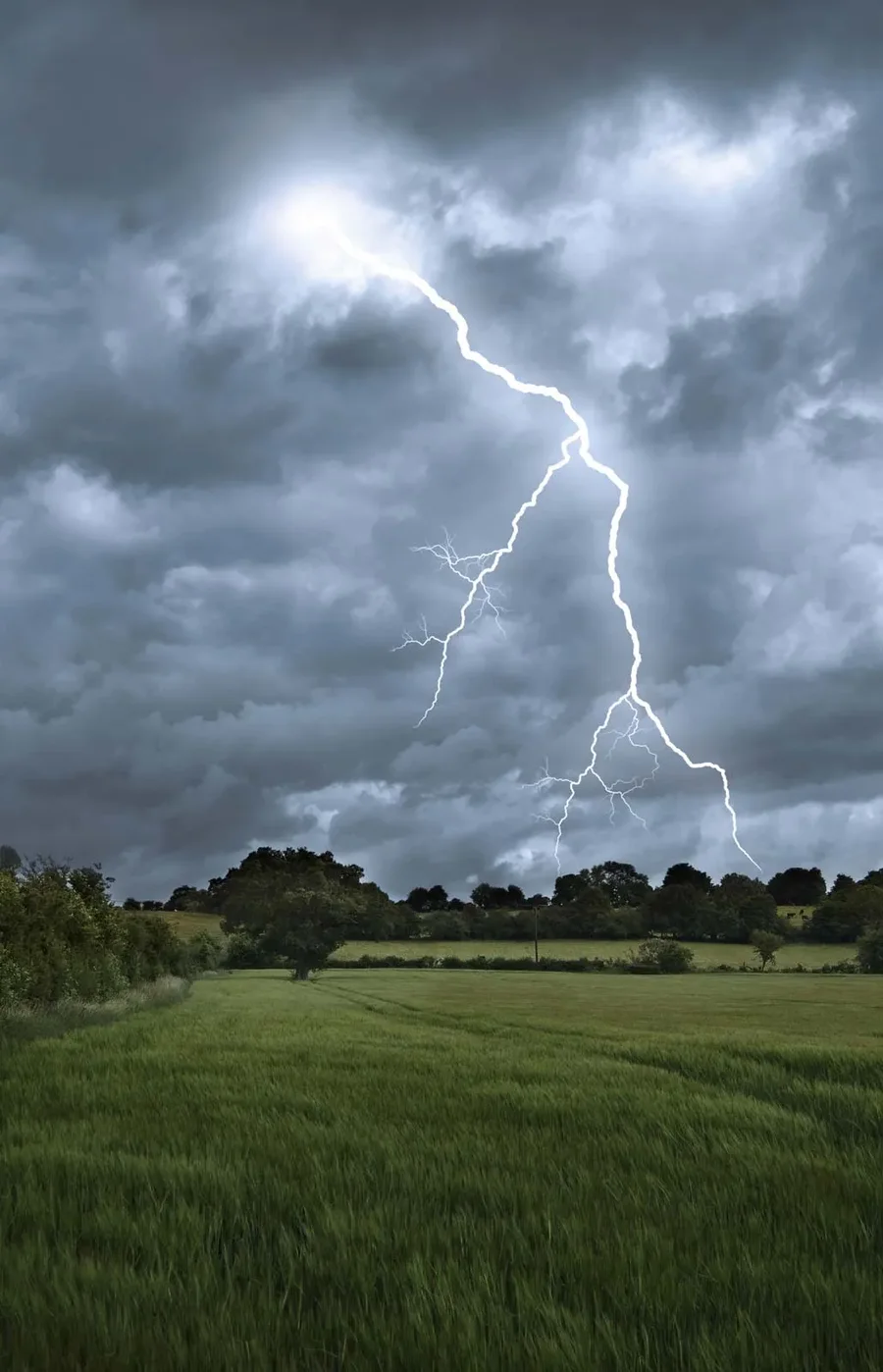
There is a moment before every storm when the world holds its breath. The birds go quiet. The leaves stop trembling. The air turns heavy and sweet, like something is about to be said. If you have ever stood in that stillness, you know that it is not empty. It is full.
The Hush Before
Stand outside when the sky goes the color of old pewter and you will feel it in your chest before you understand it. Pressure drops. The wind, which had been busy all afternoon, suddenly forgets what it was doing. Everything leans toward one long, listening silence.
This is the calm before the storm, and it may be the most honest meditation nature offers. Nobody has to tell you to be present. The sky does it for you. Your breath slows to match the stillness, your shoulders drop, and for a few moments you are not thinking about the week behind you or the one ahead. You are simply here, waiting, awake.
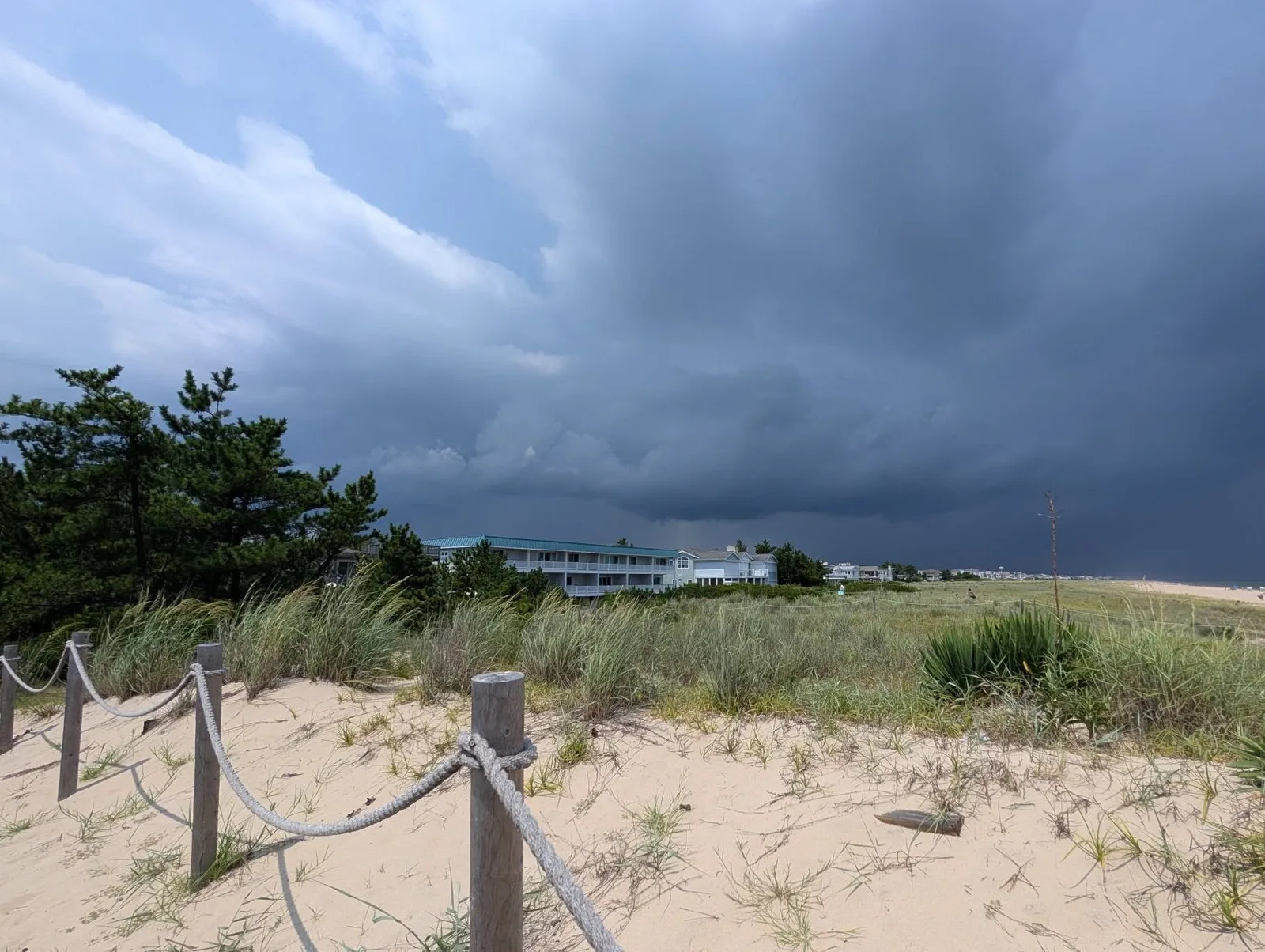
Then the first scent arrives. People have always known the smell of coming rain, and science has given it names. Some of it is ozone, the sharp, clean note left behind when lightning splits the air apart; downdrafts carry it ahead of the storm. The rest rises after the first drops land, when rain striking dry ground flicks tiny aerosols of plant oils into the air. Mixed with geosmin, an earthy compound made by soil bacteria that the human nose can detect in parts per trillion, it becomes the smell Australian scientists named petrichor in 1964. The word comes from the Greek for stone and for the fluid said to run in the veins of gods. Even the ground, it seems, exhales when the sky opens.
Listening to the Rain
If the stillness before is meditation by silence, the storm itself is meditation by sound. Anyone who has fallen asleep to rain on a roof understands this. Rain is not one sound but ten thousand, each drop landing on a different surface with a slightly different voice: a soft tap on leaves, a bright patter on tin, a deep hush on water. Together they blur into what engineers call broadband sound, a steady wash that covers the whole spectrum and gives the mind nothing sharp to snag on. Racing thoughts slow down in it. This is why so many people reach for rain recordings when they cannot sleep, and why a rainy day can feel like permission to rest.
Wind has its own instrument. Moving through pines it sighs; through dry grass it hisses; across an open field it moans low like a cello. Hang a set of chimes on a porch and the wind becomes a composer. Metal tubes are tuned so that their overtones fall into harmony, which is why chimes never sound wrong, only different each time. No two breezes play the same song. You cannot predict the next note, so you cannot do anything but listen to it, and listening, truly listening, is most of what meditation is.
There is vibration here, too, if you let yourself notice it. Thunder is not only heard but felt: a low rumble that travels through the ground, up through the soles of the feet, into the ribs. Singing bowls and gongs work on a similar principle, and many traditions have used resonant sound to settle the body and quiet the mind. A storm is the oldest gong there is.
The research on natural sound is still young, but it points in a gentle direction. Studies of people exposed to recordings of nature sounds have often found lower stress responses than with traffic and city noise. You do not need a lab to confirm it. Sit on a porch during a summer rain and notice what your body does on its own.
How a Storm Is Born
Every thunderstorm begins as something humble: warm, moist air rising. The sun heats the ground, the ground heats the air above it, and the air, lighter now, floats upward. As it climbs it cools, and the water vapor it carries condenses into droplets, each one forming around a speck of dust or salt. Billions of droplets gather into a cloud. This is the soft, white cumulus you see on a fair afternoon, drifting like a thought.
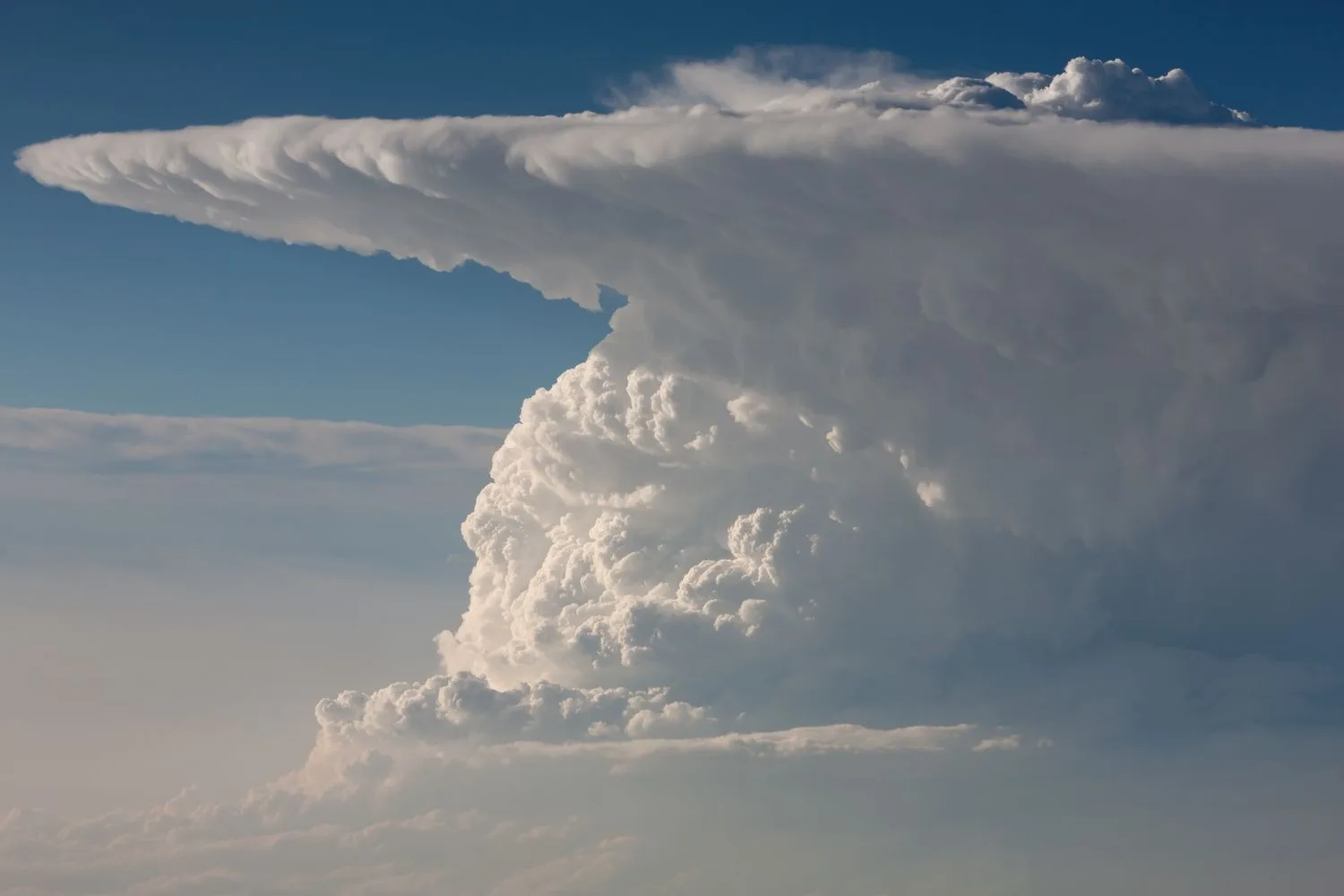
Most of those clouds stay gentle. But when the air is warm and wet enough, and the atmosphere above it unstable, the rising does not stop. The cloud climbs and climbs, towering past the height where the air is freezing, building into the great anvil-topped cumulonimbus: a mountain of vapor that can stretch miles into the sky, until it hits the ceiling of the lower atmosphere and spreads out flat, as if the sky itself had pressed a palm against it.
Inside, the cloud is a world in violent motion. Updrafts carry water droplets far above the freezing line, where they remain liquid even though they are colder than ice. These are called supercooled droplets. Around them swirl ice crystals and soft, slushy pellets called graupel. Everything is rising, falling, colliding.
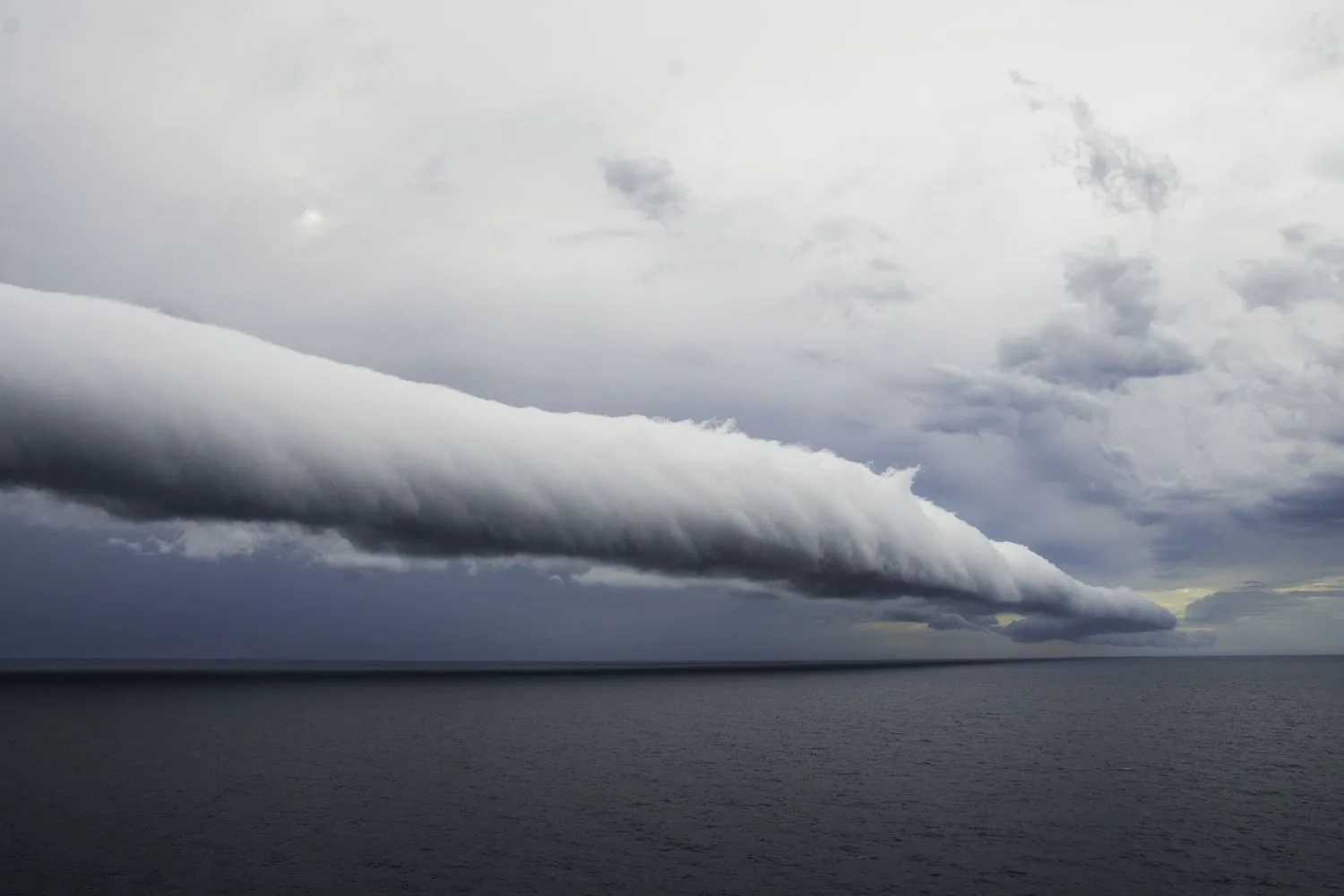
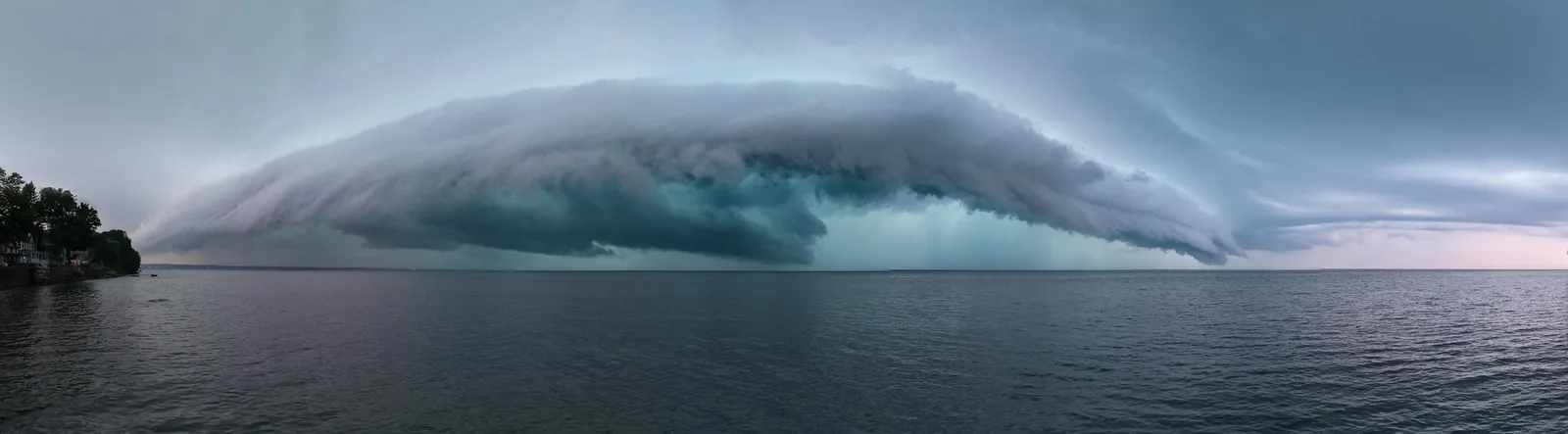
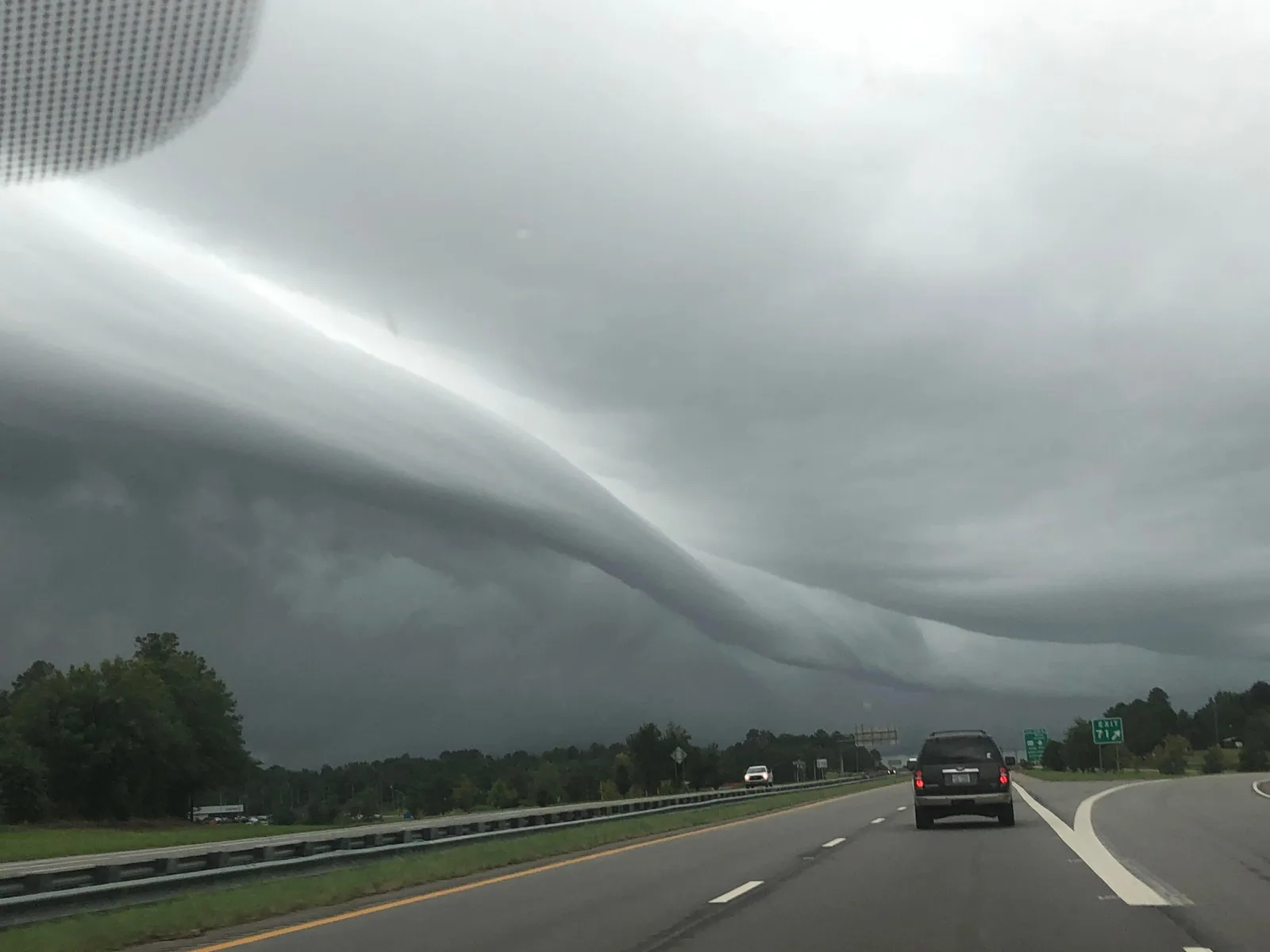
When a storm pushes cold air out ahead of itself, that air can lift the warm air in front of it and form a roll cloud or shelf cloud: a low, dark, rippled wall that arrives like a curtain being drawn. If you ever see one coming over water, you will understand why ancient people saw the sky as a living thing.
The Spark
And then the lightning. How it works is stranger than any myth.
According to the best current understanding, described by Britannica and many other sources, lightning begins with ice in the cloud. As graupel and ice crystals collide, charge is transferred between them. The smaller, lighter ice crystals tend to end up carrying positive charge and are lifted toward the top of the cloud, while the heavier graupel tends to pick up negative charge and sinks toward the middle and lower parts. The cloud becomes a battery, positive above and negative below, with a smaller positive pocket sometimes near the base. The ground beneath, drawn by the negative charge overhead, takes on a positive charge of its own.
Air is a good insulator, and for a long time it holds the charge apart. But the strain builds. Finally a channel of ionized air breaks open and a faint, branching path, called a stepped leader, feels its way down from the cloud in short bursts, searching for the ground. When it gets close, a streamer reaches up from the earth to meet it, often from something tall: a tree, a steeple, a person. The moment they connect, the circuit is complete, and a huge surge of current races back up the channel. That return stroke is the brilliant flash we see. It happens so fast it seems instant, and often many strokes follow along the same path, which is why lightning flickers.
The channel is thin, only a couple of fingers wide, but it is heated to temperatures often quoted around 30,000 kelvin, several times hotter than the surface of the sun. The air around it expands explosively, then snaps back, sending out a shock wave. That is thunder. Light travels almost instantly, sound takes its time, which is why you can count the seconds between flash and rumble and learn how far away the storm is: about five seconds for every mile.
The sky builds a bridge of light to the earth in the time it takes to blink.
Beautiful, Terrible, Necessary
It is easy to love lightning from a distance and fear it up close, and both are right. Lightning is among the most dangerous forces we routinely encounter. It kills and injures people every year, starts wildfires that burn for weeks, and can destroy a home in a flash. The old rule is simple and worth repeating: when thunder roars, go indoors. No place outside is safe in a thunderstorm.
But the same fire that frightens us is part of why we are here. Nearly four-fifths of the air we breathe is nitrogen, and almost none of it is usable by plants in that form; the two atoms in each molecule are bonded together too tightly. Lightning's heat breaks those bonds. The freed nitrogen combines with oxygen, and rain washes the resulting compounds down into the soil, where roots can drink them. Estimates suggest lightning fixes somewhere between 3 and 10 teragrams of nitrogen every year. That is millions of tons of fertilizer, delivered free, by the sky, wrapped in a thunderclap.
Think about what that means. The green of a meadow after a storm is not just rain. It is lightning, translated into leaves. And the rain itself, the whole water cycle of evaporation, cloud, storm, river, and sea, depends on storms like these to move fresh water from the oceans onto the land. Without storms, the interiors of continents would be deserts. Without lightning, the world would be poorer in nitrogen and slower to green. Wildfire, too, though destructive, is a renewal for many forests and grasslands that have evolved to depend on it.
Take storms away and you do not get a calmer world. You get a quieter, drier, hungrier one. The thunder is part of the arrangement by which the planet feeds itself.
When the Sea Becomes a Storm
If a thunderstorm is the sky clearing its throat, a hurricane is the sky singing a whole symphony. Hurricanes need warm ocean water: generally at least 80 degrees Fahrenheit (about 27 degrees Celsius) down to a depth of roughly 165 feet. They begin as clusters of thunderstorms over tropical water. Warm, wet air rises, more air rushes in beneath it to replace it, and, with the planet turning beneath it, the whole system begins to spin. Once winds reach 39 miles per hour it becomes a tropical storm and earns a name; at 74 it is a hurricane.
The warm sea is the fuel. That is why hurricanes weaken and unravel when they move over land: the engine is cut off from its supply. At the center is the eye, a strangely peaceful opening 5 to 30 miles wide, where the sky can clear and the wind drops. It is the calm before the storm all over again, and then, on the other side, the second half arrives. A large hurricane can be around 125 miles across and tower 50,000 feet into the sky. Category 1 begins at 74 miles per hour. Category 5 starts at 157.
The human cost of such storms is heavy, and anyone who has lived through one carries it. It is no wonder that so many cultures have treated great storms as gods.
The Narrow Fury
Tornadoes are the opposite temper: small, fast, and fierce. A tornado is a column of violently rotating air that reaches from a thunderstorm to the ground. They are far narrower than hurricanes, sometimes only a few dozen yards wide, and last minutes instead of days, yet the winds inside the strongest can top 200 miles per hour. They often come from the most powerful kind of thunderstorm, one with a rotating updraft, which can spin out a funnel that descends from the base of the cloud.
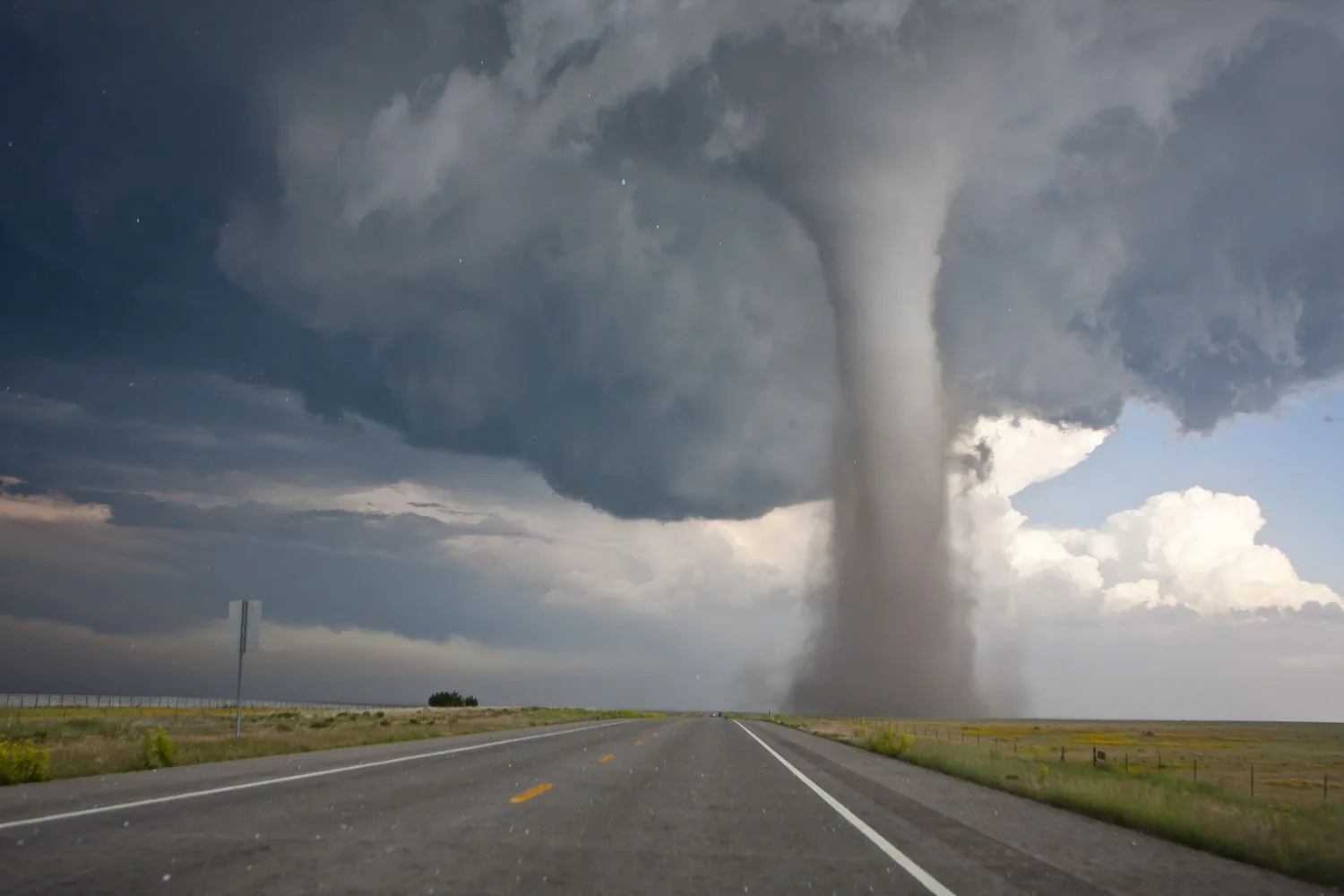
Seeing one is a humbling thing. Even from safety, you feel how small you are, and how much of the world runs on forces bigger than any of us. That is not a comfortable feeling, but it may be a necessary one.
Standing in the Wonder
Why do we keep looking up? Maybe because storms remind us of what a person forgets in the hum of ordinary days: that we live on a planet that is alive, that breathes, and that is wild at its core. The same system that frightens us feeds us. The same thunder that rattles windows lulls children to sleep. The same sky that can tear a roof away also makes the rainbow that follows.
The next time the air goes still and the light turns strange, try this. Go to a window, or better, a porch. Stay safe, but stay. Put down the phone. Breathe in the smell of wet earth coming. Listen to the first drops on the leaves, the wind in the chimes, the long low roll of thunder in the distance. Feel it in your chest. For a few minutes, do nothing else.
That is all the meditation there is. The storm does the rest.
Sources: Britannica, Thunderstorm: Thunderstorm electrification; NOAA SciJinks, How Do Hurricanes Form?; Walking Mountains, How Lightning Feeds Plants; EarthDate, The Scent of Rain.