Spiritual · Article
The Haitian Zombie: What Science Found
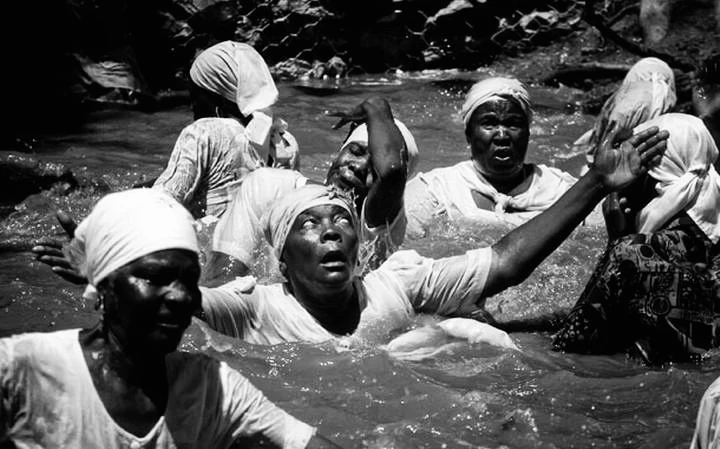
Hollywood gave us the flesh-eating corpse. Haiti had something older and quieter: a living person who is said to have lost their will. Here is what doctors, scientists and believers have said about it.
Where the zombie comes from
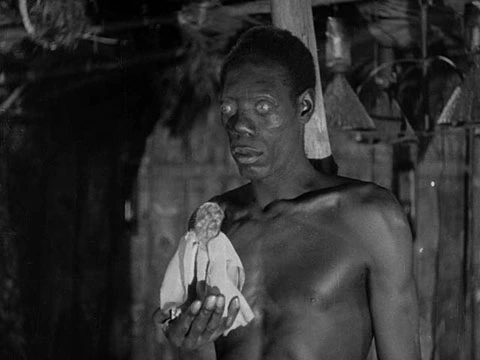
In Haitian belief, a zombie is not a monster that claws out of a grave. It is a person whose body goes on while their mind is gone. According to Haitian vodou, a person has more than one spirit. The gwobon anj animates the body, and the ti-bon anj is tied to awareness, memory and will. A bòkò, a sorcerer for hire, is said to be able to capture that second part and keep it in a bottle. What remains is a body that obeys. The signs people look for are a fixed stare, a nasal voice, an inability to lift the head, and a few repeated words and actions.
The fear has a history. The zombie is often read as a nightmare of slavery: a person forced to work without end, with no will of their own. Belief in the bòkò also does a quieter job, because it warns people that crossing the wrong person has a price.
The man who came back: Clairvius Narcisse
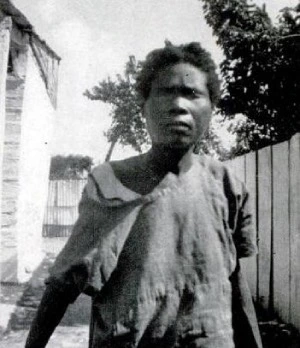
The most famous modern case began in 1962. Clairvius Narcisse entered Albert Schweitzer Hospital in Haiti with fever, fatigue and blood in his cough, and he was pronounced dead three days later. He was kept in cold storage for about a day and buried on May 2. Two American doctors’ records of his death are why the case puzzled so many people.
In 1980, a man approached a woman in the village of L’Estère and said he was her brother, Narcisse. Family and villagers accepted him, partly because he knew a childhood nickname and private family details. He said he had been awake but unable to move, that he had been dug up, given a paste, and forced to work on a sugar plantation until the bòkò who held him died.
The potion
Harvard ethnobotanist Wade Davis went to Haiti in the early 1980s to look for the biology behind this. He reported that the bòkò’s “zombie powder” had five constant ingredients: ground human remains, a tree frog, a worm, a large toad and one or more kinds of pufferfish. The pufferfish is the point. It carries tetrodotoxin, a nerve toxin that in a small dose causes numbness and tingling, and in a larger dose can stop breathing within minutes. Davis proposed that an exact sublethal dose could leave a person with a heartbeat and breath so slow that they look dead while still conscious. A second drug, from the plant Datura stramonium (jimsonweed), was then supposedly used to keep the revived person confused and obedient. Scopolamine, the datura compound, is the drug often blamed.
The science is divided. Davis published his findings in 1983 in the Journal of Ethnopharmacology, and Live Science still says his identification of tetrodotoxin has “considerable scientific merit.” But toxicologists Chen-Yuan Kao and Toshio Yasumoto wrote in 1986 that the claim was “without factual foundation,” and Bo Holmstedt called the work “simply bad science.” Zombie researchers who cite Bob Corbett, a Haiti scholar, add that someone kept on datura would still have a normal heartbeat, normal temperature, and would sleep and eat like anyone else.
What doctors found when they checked
The best medical study came in 1997, when The Lancet published work by British anthropologist Roland Littlewood and Haitian doctor Chavannes Douyon on three people named as “returned zombies.” They ran EEG and CT brain scans, plus DNA and fingerprint tests. The result was much less eerie than the legend.
- A woman who “died” at about 30 and was seen three years later had catatonic schizophrenia and no brain damage.
- A man who “died” at 18 and was named at a cockfight eight years later had brain damage, probably from lack of oxygen, and epilepsy.
- A woman who “died” at 18 and was seen 13 years later in a market had a developmental learning disability.
DNA and fingerprints showed two of the three were cases of mistaken identity. The authors concluded that grieving families often mistake wandering strangers, people with mental illness or brain injury, for relatives who died, and that no single explanation fits every case. They also tested two bòkò powders and did find tetrodotoxin, so the toxin theory was not ruled out.
How doctors and preachers talk about raising the dead
Medicine and religion describe “coming back” in very different ways, and zombies sit in the gap between them.
Doctors talk about it as a question of when death is declared. In rare cases, a heart has restarted on its own minutes after resuscitation was stopped, which doctors call the Lazarus phenomenon. Poisoning, extreme cold and deep comas can also make people look dead, which is why death is declared by careful checks and not by a glance. In every one of these cases the person was alive the whole time, or died and stayed dead. None of it is a body rising on command.
Preachers describe it as a gift of God. The Christian tradition centers on the story of Lazarus, raised from the tomb, and on the resurrection of Jesus. In that frame, raising the dead is a sign of divine power, given freely and returning a person whole. Some revival ministries today claim that the dead have been raised in their services. The claims I could find are testimonies, and I did not find independent medical records for them.
Vodou’s zombie is the reverse of both. It is made by a person, for a person’s own ends, and it returns the body without the soul. Max Beauvoir, a biochemist who was a Supreme Chief of Haitian Voodoo, has described zombification as a fair punishment for wrongdoing that takes away the desire to commit crimes. Haiti’s own penal code treats using substances that cause a lasting, death-like coma as attempted murder, and as murder if the victim is buried. The lawmakers who wrote that took the drug explanation seriously.
The bottom line
No evidence shows anyone has been raised from the dead. What the evidence does show is a mix: a toxin theory that some scientists accept and others reject, many cases that look like illness and mistaken identity, and a belief system that gives a community a way to punish and to fear. A man who was declared dead and came back in 1980 is still the best story, and the least explained. The best answer today is that nobody has proved how it happened, and nobody has proved it did not.
Sources: Mind Hacks, Zombie Research Society, Investigating the Haitian Zombie (documentary), Wikipedia, Clairvius Narcisse, Live Science. Wade Davis’s tetrodotoxin findings remain disputed.