Astrology · Article
Astrology: Written in the Stars or Written by Us?
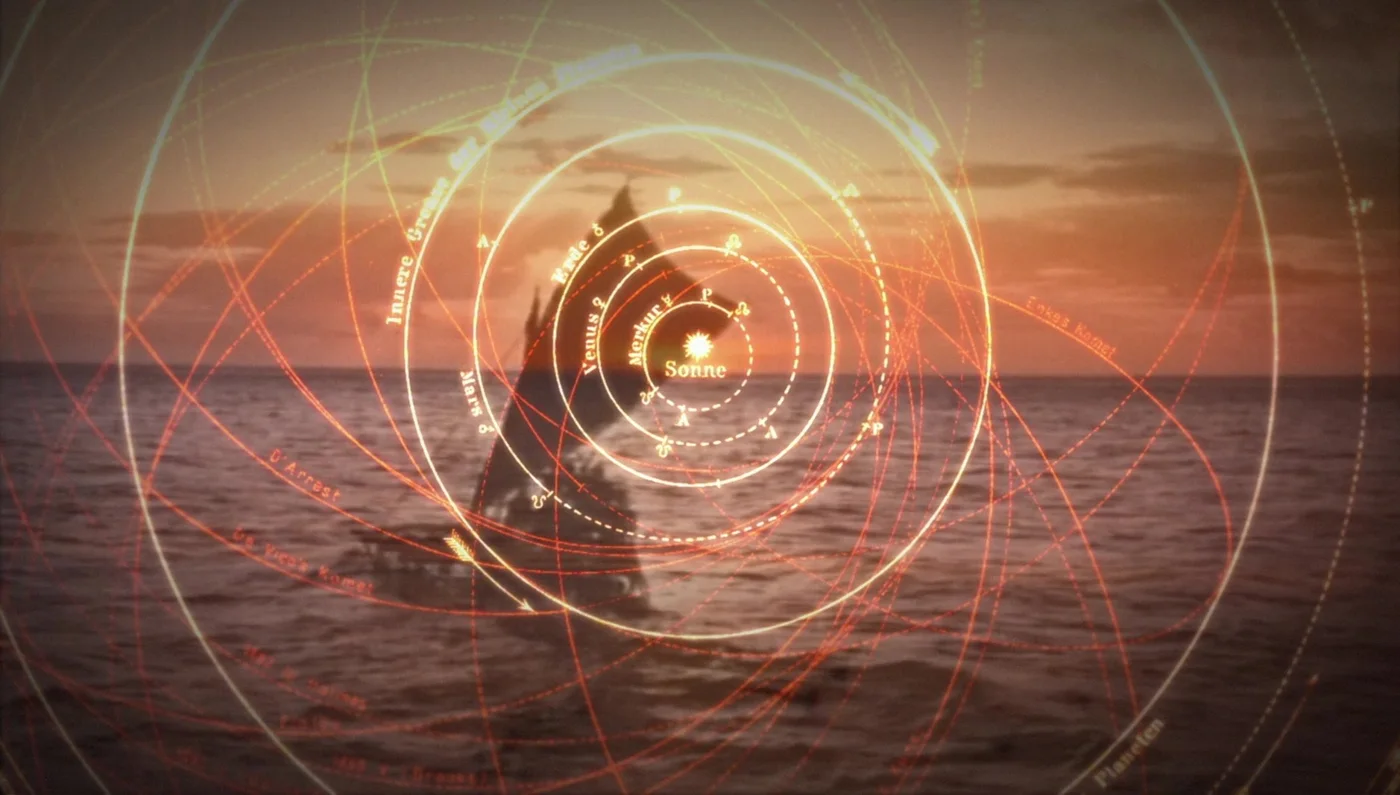
Millions of people check their sign before they check the weather. Is there anything behind it? Here is what the history, the surveys and the tests say.
Where it started
Astrology is one of the oldest systems people have used to find meaning in the sky. Western astrology traces back to Mesopotamia, and Babylonian astronomers were practicing it around 1800 BCE. After 332 BCE, in Alexandria, Greek thinkers combined the Babylonian tradition with Egyptian methods and produced the birth chart, or horoscope. A Babylonian priest named Berossus was teaching it on the island of Kos around 280 BCE. In the 2nd century CE, Ptolemy’s Tetrabiblos became a foundation of the Western tradition, and it reached Latin Europe when Plato of Tivoli translated it in 1138.
The zodiac
The zodiac is a belt of twelve signs, each covering 30 degrees of the sky. Western astrology uses the tropical zodiac, which is tied to the equinoxes and the seasons, not to the star patterns of the same names. A horoscope is a chart for an exact time and place that shows the planets, the signs and twelve “houses.” Your sun sign, the one in the newspaper, is only one-twelfth of that chart. Chinese astrology uses a different zodiac of twelve animals, starting with the Rat. The French physicist Georges Charpak and a co-author called the tropical signs “empty boxes” with no steady link to the stars.
Women and the stars
The strongest pattern in modern surveys is about who uses astrology. A 2025 Pew Research Center survey found that 27% of US adults believe in astrology and 30% consult astrology, tarot or a fortune teller at least once a year. The gender gap is wide: 35% of women believe in astrology, compared with 18% of men, and 37% of women consult it at least yearly. Among women aged 18 to 49, 43% believe in it and 46% consult it yearly. Among LGBT women, 63% consult astrology at least yearly, against 40% of LGBT men.
Pew documents who does this, not why. Most people in the survey said they do it for fun (20%) or for insight (10%). Only 1% said they rely on it a lot for major decisions. Astrology apps took off in the late 2010s, and that is part of why the practice has grown among younger adults.
Influence and superstition
For centuries astrology was part of serious learning. Tycho Brahe, Kepler and Galileo all served as court astrologers, and John Dee advised Elizabeth I. Many advances in astronomy came from trying to make astrology more accurate. Kepler still had little respect for most astrologers and called them “evil-smelling dung.” By the late 17th century, heliocentrism and Newtonian physics had weakened the idea, and in 1679 the French almanac La Connoissance des temps dropped astrology as a legitimate subject.
Belief did not disappear. In Japan, births fell by more than 25% in 1966, a hinoeuma year thought to bring bad luck to girls born in it. In 2011 the Bombay High Court dismissed a challenge to astrology’s status as a science.
Clairvoyance and premonition
Horoscopes promise a glimpse ahead, and the old name for the predictive branch is judicial astrology. The Catholic Church lists horoscopes and clairvoyance among practices it rejects. Researchers point to two things that make predictions feel true. One is confirmation bias: believers remember the hits and forget the misses. The other is what psychologists call the Barnum or Forer effect. In 1948, psychologist Bertram Forer gave students a “personal” profile that was the same for everyone, and they rated it as highly accurate. Vague lines such as “you want to be liked, but you can be hard on yourself” fit almost anyone.
Is there a connection to the stars?
The scientific community considers astrology a pseudoscience, because no mechanism links the planets to a personality that fits what is known in physics and biology. One writer points out that Neptune’s gravitational pull on a newborn is effectively zero. The tests agree:
- In a famous 1985 double-blind test in Nature, 28 astrologers tried to match more than 100 birth charts to personality profiles. They did no better than chance.
- In 1955 Michel Gauquelin reported a “Mars effect” among athletes. Later checks by seven French scientists found no statistical evidence, and one researcher suggested that parents’ reporting of birth dates may explain it.
- A pooled analysis of about 40 studies, with roughly 700 astrologers and over 1,000 charts, found that with obvious clues removed, no chart was preferred over another.
Chemistry: do the signs tell us who will click?
Compatibility charts are the most popular use of the zodiac: which signs fit, which clash. This one has been tested on a very large scale. In 2007, a team at the University of Manchester used UK census data on 10 million marriages, with signs worked out from birth dates, in a study called “Ten million marriages: a test of astrological ‘love signs.’” The signs had no effect on whether people married, or stayed married, someone of any other sign. The “chemistry” people feel is real, but it does not follow the calendar.
Does your birth month shape your character?
Not in the way your sign says. No test has linked sun signs to character traits. Birth season is a separate question, and some research has found small links between the time of year you are born and your health or mood. Winter births show higher rates of some conditions, and one 2012 study of 58,000 people in the UK found the highest depression rates among those born in May. A 2015 study of 300 celebrities tied January and February births to creativity, though it was small. Researchers say all of this is preliminary, and that likely causes are things like the mother’s nutrition and seasonal illness during pregnancy, not the planets. Birth month is not a verdict on who you are.
The bigger family: divination
Astrology is one branch of divination, the attempt to gain insight into a question by a ritual or practice, often by claiming a message from spirits, gods or “the will of the universe.” It is very old. In Shang-dynasty China, diviners cracked ox and sheep shoulder bones with heat and read the cracks. The I Ching grew out of that tradition and uses hexagrams made by tossing stalks or coins. In Greece, seers read bird flight and animal entrails, and oracles such as Delphi spoke for the gods. In 332 BCE, Alexander the Great traveled to the Oracle of Amun at Siwa Oasis. Other forms include geomancy, which reads marks made in sand, and the Tibetan Nechung Oracle, which the Dalai Lama has traditionally consulted. Critics are just as old. Cicero attacked divination in the 1st century BCE, and Sextus Empiricus wrote Against the Astrologers in the 2nd century CE. In 1572 and 1661, Saxony even allowed the death penalty for predicting the future. Experiments have never shown that divination predicts better than chance.
Tarot: from card game to oracle
Tarot began as a game. In 15th-century northern Italy, rich families such as the Visconti and Sforza of Milan paid for hand-painted decks used for a trick-taking game, and the oldest surviving complete deck, the Visconti-Sforza, dates to about 1450. The cards had no fortune-telling meaning. The French standardized a 78-card deck, the Tarot de Marseille, in the early 1600s.
The mystical turn came later. In 1781, Antoine Court de Gébelin claimed the cards held ancient Egyptian wisdom, a claim with no basis. Around the same time, Jean-Baptiste Alliette, who called himself Etteilla, produced one of the first decks made for divination. In 1856, Éliphas Lévi tied the 22 trump cards to the 22 Hebrew letters. After the Hermetic Order of the Golden Dawn formed in London in 1888, tarot became part of Western occult practice. In 1909, Arthur Edward Waite commissioned Pamela Colman Smith to create the Rider-Waite-Smith deck, the first to illustrate all 78 cards, and it is still the most widely used. Later in the 20th century, Jungian psychology recast tarot as a tool for self-understanding, and the New Age movement spread it widely. Today it is a staple of online communities and apps, and most mainstream readings are psychological more than predictive.
Pew found that 11% of US adults consult tarot cards at least once a year, nearly a quarter of those aged 18 to 29. The scientific view is the same as for astrology: no evidence that the cards foresee anything, and the readings work through the Forer effect and confirmation bias. As a prompt for reflection, though, a reader can use any set of random images to talk through a problem.
So is there meaning?
Probably not in the sky, but there may be in the practice. Historians note that calling astrology a pseudoscience before the 18th century is unfair, because astrology and astronomy were once the same study. Today, many people treat a chart as a language for talking about moods, relationships and choices. If you read your sign for fun, the evidence says it is harmless. If you rely on it to decide your life, the evidence says it will not tell you what comes next.
Sources: Wikipedia, “Astrology”, Pew Research Center, 2025, Time, Wikipedia, “Divination”, history of tarot, and CathNews on the 2007 Manchester marriage study. The Forer experiment is from the history of psychology.